
Is It Easy to Get PR in Canada? A Complete Guide to Canada Permanent Residency

Is it easy to get PR in Canada? Canada has long been one of the world’s most welcoming destinations for immigrants. With its high quality of life, strong economy, free healthcare, excellent education system, and multicultural society, thousands of people apply for Canadian Permanent Residency (PR) every year.
Is it easy to get PR in Canada?
The answer is that it depends on your profile rather than your nationality. Canada follows a merit-based immigration system where factors like age, education, work experience, language proficiency, and skills determine your chances.
This comprehensive guide explains how Canadian PR works, who qualifies, which countries face greater challenges, and how you can improve your chances of receiving an Invitation to Apply (ITA).
What is Canadian Permanent Residency?
Permanent Residency (PR) allows foreign nationals to live, work, and study anywhere in Canada indefinitely.
A Canadian PR holder enjoys many of the same rights as Canadian citizens, including:
- Living anywhere in Canada
- Working for any employer
- Access to public healthcare
- Free education for children
- Social benefits
- Protection under Canadian law
- Eligibility to apply for Canadian citizenship after meeting residency requirements
However, permanent residents cannot vote in federal elections or hold certain government security positions.
Is Canada Still Accepting PR Applications?
Yes. Canada continues to welcome skilled immigrants every year, although immigration targets and selection criteria are periodically adjusted based on economic needs and infrastructure capacity.
The country primarily seeks immigrants who can help fill labour shortages across industries such as:
- Healthcare
- Engineering
- Construction
- Information Technology
- Skilled Trades
- Education
- Agriculture
- Transportation
Is It Easy to Get PR in Canada?
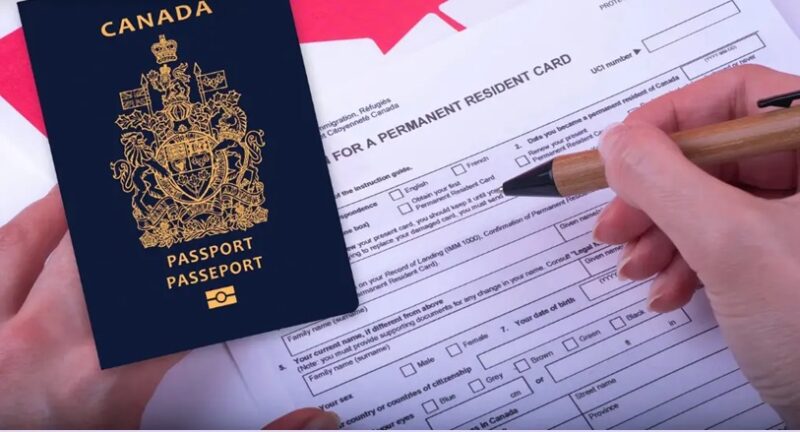
The answer depends on several factors. It is generally easier if you:
- You are between 20 and 35 years old
- Hold a bachelor’s or master’s degree
- Have skilled work experience
- Score high in English or French language tests
- Have Canadian work or study experience
- Receive a provincial nomination
- Have a valid Canadian job offer (in some programs)
It becomes more difficult if:
- You are over 40
- Have limited education
- Lack of skilled work experience
- Have poor language scores
- Work in occupations with low demand
Therefore, obtaining Canadian PR is less about luck and more about meeting the eligibility criteria.
Canada’s Main PR Programs
| PR Program | Who It’s For | Key Features |
|---|---|---|
| Express Entry | Skilled workers with education, work experience, and language proficiency. | Fastest and most popular PR pathway. Uses the Comprehensive Ranking System (CRS) to invite top candidates. |
| Provincial Nominee Program (PNP) | Applicants with skills needed by a specific Canadian province or territory. | Provincial nomination significantly increases your chances of receiving permanent residency. |
| Atlantic Immigration Program (AIP) | Workers and graduates who wish to settle in Atlantic Canada. | Designed for Newfoundland and Labrador, Nova Scotia, New Brunswick, and Prince Edward Island. |
| Rural and Community Immigration Programs | Applicants willing to live and work in smaller Canadian communities. | Helps address labour shortages outside major cities and may offer lower competition than Express Entry. |
Canada PR Eligibility Criteria
Canada evaluates applicants using a points-based system. Important factors include:
1. Age: Applicants between 20 and 29 receive maximum points. After age 30, points gradually decrease.
2. Education: Higher qualifications receive more points. Examples include:
- Bachelor’s degree
- Master’s degree
- PhD
- Professional degrees
Foreign education usually requires an Educational Credential Assessment (ECA).
3. Language Skills: Applicants must prove proficiency in:
- English
- French
Accepted tests include:
- IELTS General Training
- CELPIP
- TEF Canada
- TCF Canada
Higher language scores significantly improve CRS rankings.
4. Work Experience: Canada values skilled work experience under eligible occupational classifications. More years of relevant work generally increase your score.
5. Adaptability: Additional points may be awarded for:
- Canadian education
- Canadian work experience
- Spouse’s qualifications
- Close relatives in Canada
What is the CRS Score?
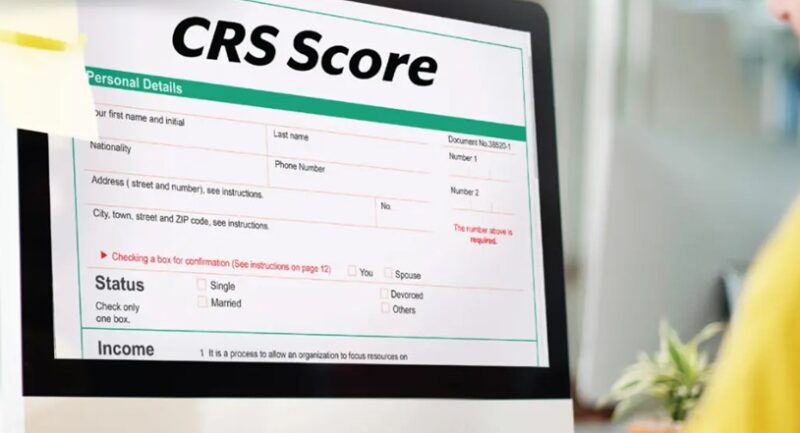
CRS stands for Comprehensive Ranking System. It ranks Express Entry candidates using:
- Age
- Education
- Work experience
- Language ability
- Job offer
- Provincial nomination
- Canadian experience
Higher CRS scores improve your chances of receiving an Invitation to Apply.
Is a Job Offer Required?
No. Many successful PR applicants receive permanent residency without a Canadian job offer. However, having one may strengthen your profile under certain immigration pathways.
Which Countries Find It More Difficult to Get Canadian PR?
Canada does not officially discriminate by nationality in its skilled immigration programs. Applicants are generally assessed using the same eligibility criteria regardless of their country of citizenship.
That said, some applicants may face practical challenges depending on conditions in their home country, such as:
- Difficulty obtaining required documentation
- Delays in security or background checks
- Limited access to approved language testing centres
- Longer processing times due to local administrative factors
Countries experiencing conflict or political instability may see these types of challenges more often. For most skilled immigration streams, your education, work experience, language scores, and CRS ranking are far more important than your passport.
Countries with Higher Numbers of Successful PR Applicants
Canada receives many successful permanent residents from:
- India
- China
- Philippines
- Nigeria
- Pakistan
- United Kingdom
- France
- United States
- Brazil
- Australia
These countries produce many applicants because of their large populations, strong educational systems, and high participation in Canada’s skilled immigration programs, not because they receive preferential treatment.
Canada PR Application Process
| Step | Canada PR Application Process |
|---|---|
| Step 1 | Check Your Eligibility Determine which immigration program (Express Entry, Provincial Nominee Program, Atlantic Immigration Program, etc.) best matches your qualifications and work experience. |
| Step 2 | Take an Approved Language Test Appear for an approved English or French language test such as IELTS General, CELPIP, TEF Canada, or TCF Canada. Higher scores improve your CRS ranking. |
| Step 3 | Get an Educational Credential Assessment (ECA) If your education was completed outside Canada, obtain an ECA to verify that your qualifications are equivalent to Canadian standards. |
| Step 4 | Create an Express Entry Profile Submit your online profile with details of your education, work experience, language test results, and other personal information to receive your CRS score. |
| Step 5 | Receive an Invitation to Apply (ITA) If your CRS score meets the required cut-off in an Express Entry draw or you qualify through a Provincial Nominee Program, you may receive an Invitation to Apply. |
| Step 6 | Submit Your PR Application Upload all required documents, including your passport, language test results, ECA report, police clearance certificates, medical examination results, and proof of work experience. |
| Step 7 | Receive Confirmation of Permanent Residence (COPR) Once your application is approved, you will receive your Confirmation of Permanent Residence (COPR), allowing you to move to Canada as a permanent resident. |
How Long Does Canada PR Take?
Processing time varies by program and application complexity. Factors affecting timelines include:
- Immigration stream
- Document verification
- Medical examination
- Background checks
- Country of residence
Incomplete applications may take longer to process.
Common Reasons PR Applications Get Rejected
Some common reasons include:
- Low CRS score
- Incorrect documentation
- Incomplete application
- Misrepresentation
- Medical inadmissibility
- Criminal inadmissibility
- Insufficient proof of work experience
- Expired language test results
Accuracy and completeness are essential throughout the application process.
How to Improve Your Chances of Getting Canadian PR
You can strengthen your application by:
- Improving IELTS or French language scores
- Completing higher education
- Gaining additional skilled work experience
- Applying through a Provincial Nominee Program
- Obtaining Canadian work experience
- Studying in Canada
- Ensuring all documents are accurate and complete
Small improvements in your profile can significantly increase your CRS score.
Is a Canadian PR Worth It?

For many immigrants, Canada remains one of the best destinations in the world.
Benefits include:
- Stable economy
- High salaries
- Universal healthcare
- Safe communities
- Excellent education
- Strong worker protections
- Pathway to citizenship
- Family sponsorship opportunities
- A diverse and multicultural society
Although the process can be competitive, many applicants find the long-term benefits worthwhile.
Final Thoughts
Getting permanent residency in Canada is achievable for many skilled applicants, but it is not guaranteed. Success depends on meeting the eligibility requirements, achieving a competitive CRS score, and selecting the immigration pathway that best matches your qualifications.
Contrary to common misconceptions, Canada does not grant PR based on nationality alone. Instead, applicants are evaluated on objective factors such as education, language ability, work experience, and their potential to contribute to the Canadian economy.
If you are planning to immigrate, start by improving your language scores, gathering the necessary documents, and researching the immigration program that aligns with your background. Careful preparation can significantly improve your chances of becoming a Canadian permanent resident.