
How to Get a Job as a Student in Canada
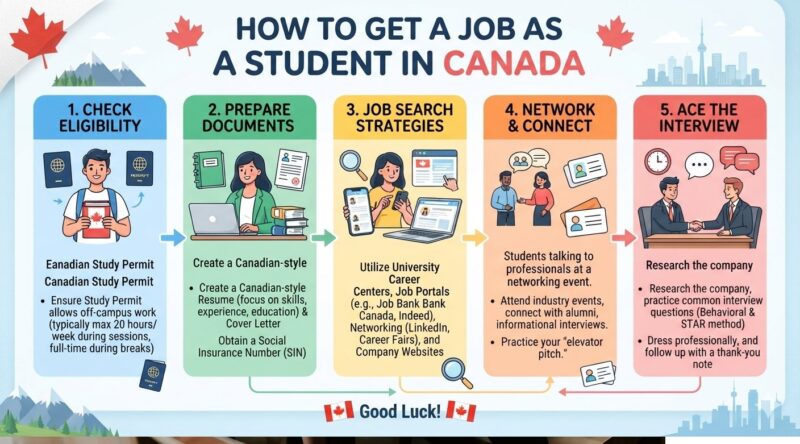
Finding a job as a student in Canada can feel like a full-time job itself. Whether you want to cover your rent, gain experience for your post-grad career, or complete a mandatory co-op, the Canadian job market demands a clear strategy.
Your strategy depends on your legal status in the country. Are you an international student on a study visa, a permanent resident (PR), or a Canadian citizen? Each group faces distinct legal frameworks, workplace rights, and hiring pathways.
How to Get a Job as a Student in Canada
This comprehensive guide breaks down exactly what you need to legally work, where the best student jobs are hiding, and how to successfully land them.
1. Legal Requirements – What Do You Need to Work Legally?
Before you send out a single resume, you must ensure your paperwork is flawless. A single administrative error can delay your hiring or jeopardise your legal status in Canada.
The Universal Requirement: The Social Insurance Number (SIN)
Every single worker to get a job as a student in Canada, regardless of status, needs a Social Insurance Number (SIN) to get paid.
- Your SIN is a confidential 9-digit code used by employers and the government to track your income and taxes.
- You can apply for a SIN online via the Service Canada portal or visit a Service Canada location in person to get it issued on the spot.
- Cost: Free.

2. Status-Specific Rules: Visas vs. Residents and Citizens
The legal framework changes drastically depending on your residency status. Review the requirements below to understand where you fit:
1. International Students (Study Permit / Visa)
If you are in Canada on a Study Permit, you are legally permitted to work, but you face strict regulatory caps enforced by Immigration, Refugees and Citizenship Canada (IRCC).
- On-Campus Work: You can work an unlimited number of hours on your school campus (e.g., at the campus bookstore, student union, or as a research assistant) as long as you maintain full-time student status.
- Off-Campus Work: The standard IRCC rule permits international students to work up to 20 hours per week off-campus during regular academic terms. During scheduled school breaks (like summer or winter holidays), you can work full-time hours.
- Crucial Visual Check: Look at your physical Study Permit paper. It must include a condition stating that you “may accept employment” or “may work off-campus.” If it does not contain this remark, you cannot legally work off-campus until you apply for a permit amendment.
2. Permanent Residents (PR) & Canadian Citizens
If you hold PR status or Canadian citizenship, you face zero legal restrictions on your employment.
- Hours: You can work unlimited hours anywhere in Canada.
- Paperwork: You only need to provide your valid SIN card/letter and standard government-issued photo ID (like a provincial driver’s license or photo card) when onboarding with an employer.
Top Fields & Industries Hiring Students Right Now
Student-friendly roles look for flexible scheduling, minimal prior corporate experience, and a willingness to learn. The top industries actively recruiting students in Canada include:
- Campus Enterprises: Peer tutoring, administrative assistance in department offices, library services, and campus recreation roles. These are ideal because they understand your class schedule and prioritise your academic success.
- Retail and Customer Service: Cashiers, sales associates, and stock associates at grocery chains, apparel shops, and tech retailers.
- Hospitality and Food Service: Baristas, servers, kitchen staff, and hosting staff. These roles offer flexible evening and weekend shifts, plus immediate cash flow via tips.
- Logistics and Warehousing: Material handlers, fulfilment specialists, and stock selectors. Ideal for students looking for high-paying night shifts or intensive weekend blocks.
Where to Find Student Jobs (Digital & Physical Platforms)
The days of just walking into a mall with a stack of paper resumes are largely over. To secure a job quickly, use a multi-channel approach.
1. Institutional Job Boards (Your School’s Career Portal)
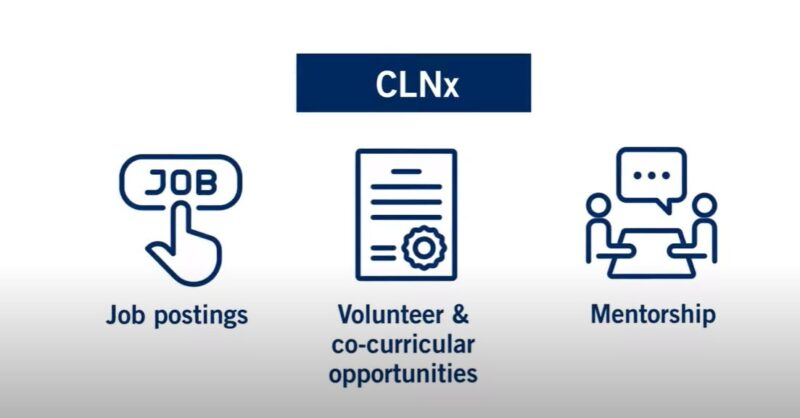
Do not overlook your own college or university job board (e.g., clnx at the University of Toronto, myCareer at Dalhousie, or similar portals at your local college).
- Employers who post here are explicitly looking to hire students from your specific school.
- This is also where you will find institutional Work-Study programs, which offer subsidised on-campus jobs exclusively for students demonstrating financial need.
2. Major Canadian Digital Job Boards
When searching online, use targeted filters such as “Student,” “Part-Time,” or “Entry-Level.”
- Government of Canada Job Bank: Features a dedicated “Student Jobs” filtering tool that connects young people with federally funded opportunities.
- Indeed Canada: The largest aggregate job search engine in the country. Set up keyword alerts for your local city.
- LinkedIn: Best for corporate summer internships, co-op placements, and building a professional network within your field of study.
3. The Power of “Hidden” Job Markets & Local Cold-Calling
Many local businesses (independent cafes, neighbourhood grocery stores, boutique retail shops) do not want to spend money posting on digital job boards.
- Action Plan: Print out five clean copies of your resume. Visit local businesses during their slowest operational hours (typically 2:00 PM to 4:00 PM on weekdays).
- Ask to speak directly with the hiring manager, introduce yourself confidently, state your availability, and leave your resume.
Direct Action Plan – How to Land the Job
Knowing where the jobs are is only half the battle. To stand out among hundreds of student applicants, execute these optimisation steps:
| Optimise for Canadian Resume Standards |
|---|
| Canadian employers look for short, punchy resumes that focus heavily on practical results. |
| Length: Keep your resume strictly to 1 to 2 pages max. Omissions: Do not include personal information such as your photo, date of birth, marital status, religion, or your specific visa status in the resume text. Canadian human resources departments actively filter these out to avoid systemic bias claims. Formatting: Use strong action verbs to describe previous work, volunteer experience, or school group projects. |
| Clear, Explicit Availability |
|---|
| Employers hiring part-time students care deeply about scheduling logistics. If your availability matches their open shifts, you are halfway to an interview. |
| Create a small, clean table or bulleted list at the top or bottom of your resume highlighting your exact available working blocks (e.g., Mondays: All Day, Tuesdays/Thursdays: After 4 PM, Weekends: Open). |
| Protect Yourself Against Employment Scams |
|---|
| Unfortunately, students are prime targets for employment fraud. |
| Red Flags: Beware of employers who offer to hire you immediately without an interview, ask you to deposit a cheque and send money back via crypto/gift cards, or demand that you pay a “training fee” upfront. The Rule: Legitimate Canadian employers will never ask you to pay money to get a job. |
Leverage Networking: The Canadian Secret Weapon

In Canada, “It’s not just what you know, it’s who you know.” Networking can feel intimidating, but Canadians are generally polite and open to helping students who show genuine curiosity.
A – Informational Interviews
An informational interview is a 15-minute conversation where you ask a professional for advice about their career path. Never ask for a job during an informational interview. Instead, build a relationship.
- Find professionals working in your dream industry on LinkedIn.
- Send a personalised connection request: “Hi [Name], I’m a student studying [Program] at [University]. I see you work in [Field] and I really admire your career path. Would you be open to a brief 15-minute virtual coffee chat to share your advice on breaking into the Canadian industry?”
- If they agree, come prepared with smart questions about industry trends, required certifications, and workplace culture. Often, when an opening comes up at their company later, they will remember you and refer you.
B – Attend Networking Events
Go to career fairs hosted by your campus, industry-specific panels, and local Chamber of Commerce mixers. Dress sharply, bring business cards (or a QR code linking to your LinkedIn profile), and practice your elevator pitch, a 30-second summary of who you are, what you study, and your career goals.
How to Handle the “No Canadian Work Experience”
International students and young domestic students often face a frustrating paradox: You need experience to get a job, but you need a job to get experience.
If you have zero Canadian work history, employers may worry that you won’t adapt well to local workplace culture or communication styles. You can break this cycle using three methods:
1. Volunteering
Recruiters in Canada favour volunteering. It counts as real work experience on your resume. Look for opportunities with organisations like the YMCA, local food banks, animal shelters, or campus clubs. Volunteering demonstrates your work ethic, improves your English or French communication skills, and provides you with local professional references.
2. Extracurricular Involvement
Did you lead a project in your university’s marketing club? Were you the treasurer for a student society? List these under a “Leadership Experience” section on your resume. Managing budgets or organising campus events requires the exact same transferable skills as a corporate job.
3. Freelancing and Gig Work
Platforms like Upwork, Fiverr, and Rover allow you to build an independent track record. If you can write copy, design graphics, edit videos, or pet-sit, you can create your own employment history while working completely on your own schedule.
Master the Job Interview
When an employer calls you for an interview, it means your resume did its job. The interview is your opportunity to prove that you are reliable, pleasant to work with, and capable of doing the tasks.
Use the STAR Method for Behavioural Questions
Canadian interviews heavily rely on behavioural questions, which usually start with: “Tell me about a time when you…” or “Give me an example of how you handled a difficult customer.” Respond using the STAR framework:
- S – Situation: Set the scene and give context (keep it brief).
- T – Task: Explain the challenge or problem you needed to solve.
- A – Action: Describe the specific steps you took to address the problem.
- R – Result: Share the positive outcome, using numbers if possible (e.g., “The customer left happy and left a 5-star Google review”).
Prepare Smart Questions for the Interviewer
At the end of the interview, you will always be asked: “Do you have any questions for us?” Saying “No” signals a lack of interest. Always ask two or three strategic questions:
- “What does a typical day look like for a student working in this role?”
- “What are the biggest challenges someone faces when starting out in this position?”
- “How do you measure success for your part-time team members?”
Balance Work and Studies Successfully
Landing the job is a major win, but keeping it while maintaining your grades requires strict discipline. If your grades drop below a certain threshold, you risk academic probation or losing your student status.
| Strategy | Implementation Tip |
| Use a Digital Planner | Map out your entire semester’s exams, assignment due dates, and work shifts using Google Calendar or Notion. |
| Communicate Early | Give your manager your exam schedule at least two to three weeks in advance. Most employers are happy to reduce your hours during finals week if you give them notice. |
| Factor in Commute Time | A job that pays $1 extra per hour but requires a 90-minute transit ride each way will drain your energy and study time. Factor in the total time investment before accepting an offer. |
| Learn to Say No | If a coworker asks you to cover their shift the night before a major midterm, protect your academics first. |
Summary Checklist for Student Job Hunting
To wrap it up, keep this quick action checklist in mind as you start your journey to get a job as a student in Canada.
- Verify your legal work limits on your Study Permit (if international).
- Apply for your Social Insurance Number (SIN) immediately.
- Strip out all personal photos, ages, and demographics from your resume format.
- Create a tailored LinkedIn profile and download the Indeed app.
- Bookmark your college or university’s internal career board.
- Secure at least one local volunteer role if your resume is empty.
- Practice the STAR method out loud to prepare for behavioural interviews.
By taking a systematic approach, remaining resilient through rejections, and proactively building a local network, you will secure a job that supports your lifestyle and sets up a successful future career in Canada.